

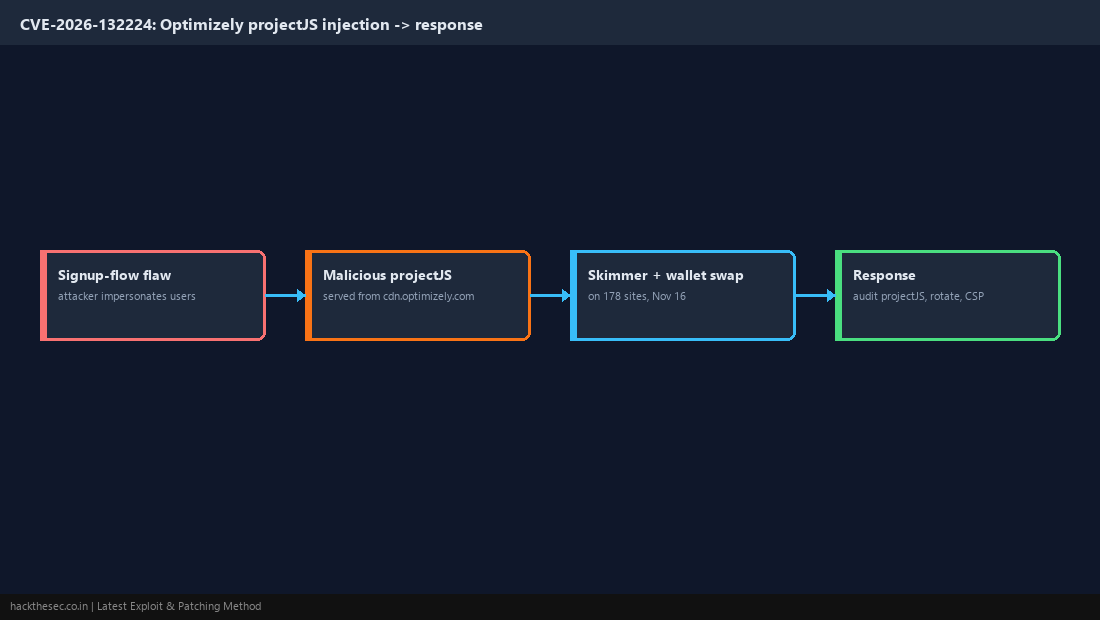
⚠ HIGH PRIORITY — added to CISA KEV on Nov 24, 2026. CVE-2026-132224 is a flaw in the Optimizely Web Experimentation account signup flow. On 16 November 2026 an attacker used it to impersonate users on targeted customer accounts and insert malicious JavaScript into their projects. Because Optimizely's snippet runs on every page of a customer's site, that code reached their visitors directly from cdn.optimizely.com. CVSS 3.1: 8.7.
Optimizely says it closed the flaw within three hours of detection, removed the injected code from all affected projects, and that fewer than 5% of customers were hit. It was not a credentials breach and no other Optimizely product was affected. Researchers at Report URI found the malicious code in snippets of 178 organisations, including large news, finance and SaaS brands.
What the injected code did (per Report URI)
- Swapped cryptocurrency wallet addresses in page text, form fields, the clipboard and outgoing requests.
- Skimmed card number, expiry and CVV from forms on the page (cards inside hosted payment iframes were out of reach).
- Sent page URL, non-HttpOnly cookies and screenshots to the attacker's server.
- On iPhone and iPad, loaded iOS exploit kits (patched in iOS 18.7.3 / 26.3 and later).
Who needs to act
Optimizely fixed the platform flaw itself; there is nothing to install. But if your site uses Optimizely Web Experimentation, and especially if Optimizely contacted you, treat 16 November 2026 as a possible compromise of your visitors' data.
Response steps
- Audit your code: search every project's Project JavaScript and experiment custom code for
1688360.cc,atob(and any script you did not write. - Review access: check which users, API tokens and integrations can edit projects; remove unused ones and rotate credentials.
- Cards: treat card details typed into your own (non-iframe) forms on 16 November as potentially exposed and involve your payment provider.
- Sessions: rotate session tokens or secrets stored in non-HttpOnly cookies, and mark session cookies HttpOnly.
- Harden: deploy a Content Security Policy that limits
connect-src, avoids'unsafe-eval', and has reporting turned on. Allow-listingcdn.optimizely.comalone does not stop this kind of attack. - Decide, with legal advice, whether your customers need to be notified.
Indicators to block and search for
1688360.cc            (C2: track.js, card.php, hit.php)
5vobauua3ojpklx.icu   eil786npto9u5bq.icu   (iOS exploit delivery)
webshell.lol          linkforge.cc          (related earlier wave)
markers: window._k7   window.__k7b   data-channel-code="02111110"
Check web proxy, DNS and CSP-report logs for these domains from 13 November onwards.