
![[HIGH PRIORITY] Red Hat ABRT Privilege Escalation (CVE-2015-5287)](https://lh3.googleusercontent.com/blogger_img_proxy/AEn0k_v9m1kao_6oDQskYRf-RLuw3ah9dk-zKr95pbPijUhw0am65V9aWyYEom44AZY672f--BpFwP6pCwz5vzpknuNHaJlvcK_4dxfRLViDnKjSA_s6vv2w8-XdaFTvSG9ttqgfWz8pDuPVNtyDpmjrtp87wzFPEg7O_gENyT4t)
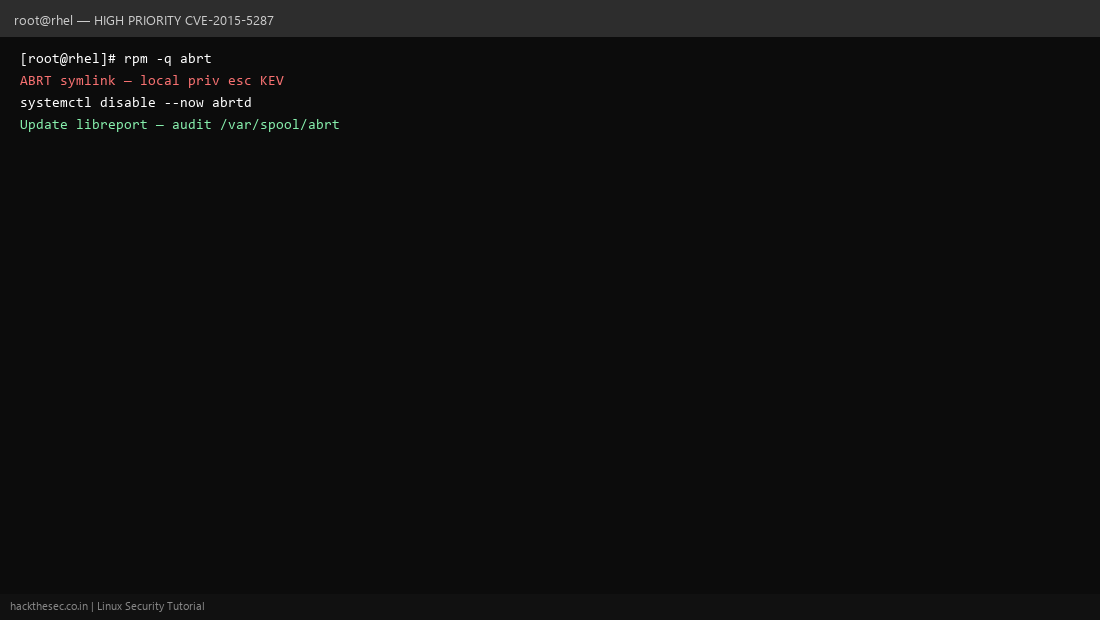
⚠ HIGH PRIORITY — CISA KEV (Aug 26, 2026). CVE-2015-5287 is a privilege escalation in Red Hat Automatic Bug Reporting Tool (ABRT). Local users exploit predictable symlink paths to gain root — part of the UAT-10147 / BadIIS Linux privilege-escalation chain under active exploitation.
Affected systems
- Red Hat Enterprise Linux with ABRT before 2.7.1
- Fedora and CentOS derivatives with
abrtpackage installed - Legacy RHEL 7/8 servers still running abrtd service
Check if ABRT is installed
rpm -q abrt abrt-addon-ccpp 2>/dev/null
systemctl status abrtd 2>/dev/null
ls -la /var/spool/abrt/
Patching Method
- Update ABRT/libreport packages:
dnf update abrt libreportoryum update. - Preferred on RHEL 8+: disable and remove ABRT entirely (deprecated in RHEL 9).
systemctl disable --now abrtd abrt-journal-core abrt-oops abrt-xorgdnf remove abrt*if crash reporting not required.- Use
systemd-coredumpas modern replacement on RHEL 9+. - Audit
/var/spool/abrtfor suspicious crash dumps and symlinks. - Review auth logs for privilege escalation after web-shell footholds.
systemctl disable --now abrtd.service
rpm -q abrt | grep -v 'not installed'
Until patched
- Disable abrtd immediately on internet-facing Linux web servers
- Limit local user shell access on compromised-class hosts
- Monitor for sosreport/abrt abuse in audit logs
CVSS: 7.8 High. Federal deadline: 09 Sep 2026.